Loading Events

This event has passed.

A CELEBRATION OF ARTISTS, COMMUNITY AND CULTURE – SSCAC 85TH ANNIVERSARY

October 16 @ 5:00 pm - 9:00 pm
85th Banner

Celebrate art, culture & community with delectable cuisine, live art, soulful music & more—support our $100K Community Renovation Fund!

_________________________________

Honoring Our Legacy | Building Our Future

Join the South Side Community Art Center (SSCAC) as we celebrate 85 years of artistic brilliance, community impact, and cultural preservation. Our 85th Anniversary Celebration is more than an evening of festivities—it is a powerful tribute to our legacy and a critical step toward our future.

Founded in 1940, SSCAC is the nation’s only remaining WPA-era Black art center, and for 85 years, we have been a cornerstone of creativity in Chicago’s Bronzeville neighborhood. As we commemorate this historic milestone, we also look forward with purpose through our Capital Campaign to renovate, preserve, and expand our beloved center.

Proceeds to Benefit the Community Renovation Fund

A portion of all proceeds from this year’s celebration will support our Community Renovation Fund, a vital part of our capital campaign. These funds will help us restore our historic facility, expand our programming space, and ensure future generations of artists have a place to thrive. Our event fundraising goal is to raise $100,000 to support our $200,000 Community Renovation Fund. This fund is a vital part of our overall $18 million dollar Black Art Rising Campaign.

Why Your Support Matters

Your presence and partnership are essential. Whether through purchasing a ticket or becoming a valued event partner, you are investing in the cultural future of Chicago. Your contribution empowers us to:

  • Preserve an irreplaceable landmark of Black history and artistry
  • Expand access to art education, exhibitions, and community engagement
  • Create a lasting space for artists to grow, express, and lead


Event Highlights

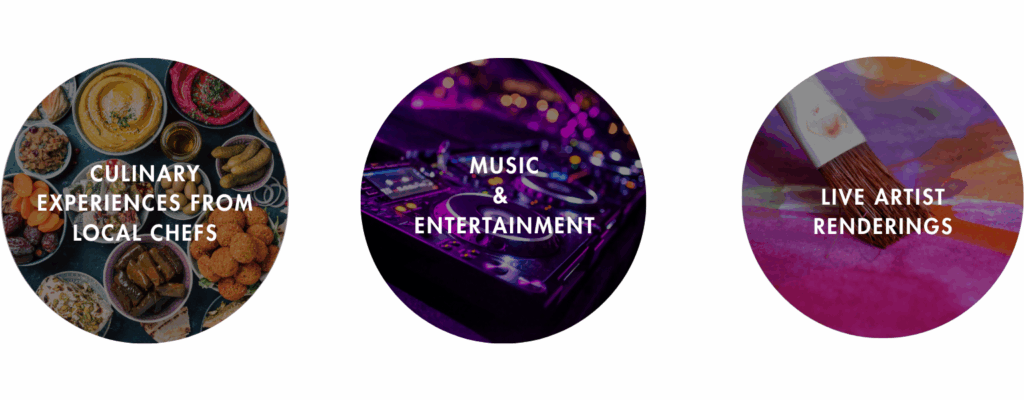
  • Culinary Experiences from Local Chefs
  • Live Artist Renderings
  • SSCAC Featured Collection on Display
  • Silent Auction Featuring Art, Luxury Trips, Entertainment, and Experiences
  • Recognition of Cultural Leaders & Legacy Honorees

Featuring 6 Live Artists

Six of Chicago’s very own artists will create new work live during SSCAC’s 85th Anniversary Celebration — a testament to the legacy and future of Black art on the South Side.

Martha A. Wade · Dana Todd Pope · Paul Branton · Kiarah Jackson · Kudzai B. Mutasa · Jess Patterson

Their work honors the past while shaping what’s next, reminding us why SSCAC has been a cultural home for 85 years and counting.


Join Us in Celebrating 85 Years of Creativity and Community

Together, let’s honor the artists, uplift our community, and preserve the culture that defines us.

_______________________


_______________________


Thanks to Our Sponsors


Margaret Burroughs Sponsor:

Robert S. Guttman Family Charitable Fund


Archibald Motley Sponsor
Bill Michel and Mark Botelho
Bryan Perry
Judy Matthews

In-Kind Sponsors:
Pigment International
William Bigham Gallery
Strategic Events Solutions, Inc. 

Haven Entertainment Center

932 E 43rd St
Chicago, IL 60653 United States

MIXED MEDIA AND STILL LIFE

Works in EMERGENCE are diverse in their subject matter and media, but a few themes reappear throughout. Working in abstraction or in the traditionally peaceful genre of still life, artists like William Carter, Allen Stringfellow, and Jonathan Green express themes of interiority or sociability, history or modernity. Notably, Stringfellow and Ralph Arnold both experimented with media and materials and worked extensively in collage, which allowed them to combine abstract design, figurative imagery, and on occasion political ideas.

Viewers typically expect Black artists to focus on particular aspects of their social and political identities within their work. Where might those expectations come from? Still life, abstraction, and collage may express many different things about artists’ interior lives and their visual and social observation, whether connected to public manifestations of identity or not.

William Carter’s mid-century still life Untitled presents a group of vibrantly colored bottles that invite the viewer’s gaze, set against a similarly colorful background with floral elements like grapes and leaves. They give evidence of conviviality and might be interpreted as symbols of social gatherings, but they could also just be a collection of pleasing forms. We might put Carter’s still life in dialogue with that of Jonathan Green, who became close friends with Carter while living in Chicago. Green’s close-up view of an eloquently simple composition presents oranges, a pear, and a lemon in front of two vessels. Works like this piece call the viewer to examine the objects the artist chose to include, to consider how they interact with each other like bodies in space, and to reflect on their meaning within the traditional genre of still life painting.

Collage might suggest the piecing together of identity from different components that might not usually coexist, giving room for more expansive imaginations of meaning than a straightforward representational image might allow. It could also just be an inventive way of combining colors, shapes, and textures. Allen Stringfellow’s Untitled, a collage from 1962, brings familiar motifs from still life—fruit and flowers, desserts and glassware—together with imagery of artist’s models and performers. Layered with paint and tissue paper that frustrate the viewer’s attempt to get clarity on the subject matter, the bursts of form and colors hint at the splashy abstraction of Stringfellow’s untitled, textured painting made from house paint and particulate on cardboard. Here the artist tests commonly found materials to create new textures and plays with the creation of colors and finishes that diverge from “Western” academic painting methods.

In The Waiting, Arnold constructs a large collage from different paper components, lace, and paint. In the piece, elements of European and African art are placed in dialogue with one another, while some figures appear alone and isolated, others in large groups. Without giving easy answers, Arnold implies questions about social issues. Who is waiting, and for what? In his Love Sign II, which bears the words “Love is Universal,” Arnold asserts the equal validity of all types of romantic affection and love, utilizing collage to convey a more straightforward political message.